About 270 minutes
Religion and the War — Story, Setting & Ideas
World Events
61,899 recorded words. 10 minutes difference from this book's estimate.
View Gutenberg source #36757
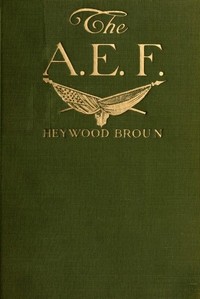
For The A. E. F.: With General Pershing and the American Forces — Reading Notes, the stored edition analysis reports 59,677 words, 4 hr 20 min estimated reading time, and 6 detected text sections.
The text analysis averages about 17.9 words per sentence, while the detected sections provide another way to judge how the source is divided.
Project Gutenberg metadata also associates the work with “World War, 1914-1918 -- Personal narratives,” connecting these edition facts with the source record’s subject description.
Explore this collection
These alternatives are selected using recorded categories and estimated reading time.
About 270 minutes
World Events
61,899 recorded words. 10 minutes difference from this book's estimate.
View Gutenberg source #36757About 236 minutes
World Events
54,235 recorded words. 24 minutes difference from this book's estimate.
View Gutenberg source #10099About 232 minutes
World Events
53,242 recorded words. 28 minutes difference from this book's estimate.
View Gutenberg source #31211Search stored excerpts and compare books → Choose by your preferences →
Choices use stored catalog measurements. Estimates vary with reading speed. A shared category is a catalog label, not a claim that two books have the same argument or literary quality.
Search reads excerpt text stored with this catalog and links to its associated Gutenberg record. The connection is stored in the site database; this tool does not recheck that every excerpt is word-for-word identical to that external record. Excerpt search does not cover every chapter and does not verify historical publication dates.
Catalog snapshot checked: 2026-09-25. Coverage: 95 public books, 95 available source excerpts.
Read the complete public-domain text at its original source.
Read on Project GutenbergHeywood Broun’s account of the American Expeditionary Forces opens not with a parade or a briefing, but with a submarine scare. A sailor shouts “Voilà un sousmarin,” a card game pauses, and the ship’s gun fires twice. The passengers—ambulance drivers and nurses—cheer as if at a football game. Broun’s eye for the incongruous detail, like a periscope described as a “stray beanpole,” sets the tone for a narrative that moves between the mundane and the momentous. The book is structured as a series of episodes, each chapter a self-contained scene: the crossing, the arrival in France, visits to the French and British armies, and finally the American troops in the trenches. Broun, a journalist, writes with a reporter’s immediacy, but his observations are filtered through a wry, often skeptical sensibility.
The book’s structure is built around movement—across the Atlantic, through French towns, toward the sound of guns. Chapter titles like “The Big Pond,” “Within Sound of the Guns,” and “The American Army Marches to the Trenches” trace a trajectory from rear to front. But Broun resists a simple linear narrative. He pauses for set pieces: a visit to Verdun, a look at the French army, a chapter on aviators. The effect is less a continuous story than a series of dispatches, each with its own focus. The movement is not just geographical; it is also tonal. The opening chapter’s excitement gives way to the grimness of trench life. Broun’s prose shifts accordingly, from the jaunty rhythm of the submarine chase to the flat, factual tone of the later chapters. This structure mirrors the experience of the soldier, who moves from anticipation to boredom to fear, without a clear arc.
Certain images recur, linking disparate sections. The periscope in the first chapter—a “stray beanpole” with a “rakish tilt”—reappears in later descriptions of submarines and observation posts. The cheer that greets the submarine’s near-miss is echoed in the “home team crowd” rooting for the ship. Broun uses these repetitions to create a sense of continuity. A more striking image is the aviator Navarre landing on an army blanket: a stunt that encapsulates the romance of early aviation. But Broun undercuts it by noting that Navarre was later arrested for running down three gendarmes. The blanket, once a symbol of skill, becomes a marker of the tension between military discipline and individual flair. These images are not merely decorative; they carry the book’s argument about the erosion of chivalry in modern war.
Broun devotes a full chapter to aviators, and it is here that his structural method—moving between scenes—yields its sharpest observations. He traces the shift from the French ideal of the aviator as a “knight and sportsman” to the German system of “teamwork” and the Flying Circus. The French saying “all aviators are a little crazy” gives way to squadron flying and obedience. Broun notes that America has “done most to take romance out of the air” by requiring lectures in meteorology and physics. He compares the scholarly aviator to Launcelot learning foot-pounds. Yet he also records a counter-example: a young American who stunts with a French pilot. The chapter is not a simple lament; it is a report on a transformation. Broun’s evidence is anecdotal—the story of Navarre, the remark of the American officer who “did not intend to treat aviators like prima donnas”—but it accumulates into a portrait of a profession losing its mystique.
Broun writes as a journalist, not a soldier. He is present at the submarine attack, but he is in a stateroom, not on deck. He visits the front, but he returns to Paris. This perspective shapes the book’s structure: it is a series of visits, not a sustained immersion. Broun is frank about his limitations. He reports what he sees and hears, but he does not claim to know the soldier’s experience. The chapter “Letters Home” is built around the letters of others. The chapter “Men With Medals” examines the gap between official recognition and actual deeds. Broun’s voice is that of an observer, sometimes ironic, sometimes earnest. He notes the cheer for the submarine and the “ho-old ’em” of the crowd, but he also records the silence of the wounded. The book’s strength is in these juxtapositions: the civilian’s excitement and the soldier’s weariness, the romance of flight and the reality of the lecture hall.
Broun’s book is best read as a collection of snapshots, each framed by a reporter’s eye for the telling detail. The structure—episodic, moving from scene to scene—invites the reader to dip in and out, but the recurring images and themes reward a straight-through reading. Pay attention to the moments when Broun steps back from description to offer a wry comment; these are the hinges on which the book turns. The aviator chapter, in particular, condenses the book’s central tension between the old war and the new.
I keep returning to Broun’s quiet bewilderment at how quickly young men shed their civilian selves for the uniform’s discipline. There’s a strange tenderness in those vignettes, the way he notices the gap between what they expected and what they met. The same ache surfaces in that other old volume, Thirty Canadian V.Cs., 23d April 1915 to 30th March 1918 — Background and Themes, though its stories are sharper, more wounded. I think of them together often.
Your answers remain private and are stored only in this browser.