About 392 minutes
Merchantmen-at-arms : the British merchants' service in the war — Inside the Classic
World Events
90,142 recorded words. 33 minutes difference from this book's estimate.
View Gutenberg source #31953
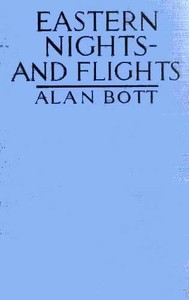
This digital edition of Eastern Nights - and Flights: A Record of Oriental Adventure. — Text and Context is described by source-level measurements including 82,535 words, 5 hr 59 min estimated reading time, and 9 detected text sections.
The text analysis averages about 20.8 words per sentence, while the detected sections provide another way to judge how the source is divided.
Project Gutenberg metadata also associates the work with “World War, 1914-1918 -- Personal narratives, English,” connecting these edition facts with the source record’s subject description.
Explore this collection
These alternatives are selected using recorded categories and estimated reading time.
About 392 minutes
World Events
90,142 recorded words. 33 minutes difference from this book's estimate.
View Gutenberg source #31953About 321 minutes
World Events
73,626 recorded words. 38 minutes difference from this book's estimate.
View Gutenberg source #29489About 406 minutes
World Events
93,227 recorded words. 47 minutes difference from this book's estimate.
View Gutenberg source #37372Search stored excerpts and compare books → Choose by your preferences →
Choices use stored catalog measurements. Estimates vary with reading speed. A shared category is a catalog label, not a claim that two books have the same argument or literary quality.
Search reads excerpt text stored with this catalog and links to its associated Gutenberg record. The connection is stored in the site database; this tool does not recheck that every excerpt is word-for-word identical to that external record. Excerpt search does not cover every chapter and does not verify historical publication dates.
Catalog snapshot checked: 2026-09-25. Coverage: 95 public books, 95 available source excerpts.
Read the complete public-domain text at its original source.
Read on Project GutenbergAlan Bott's Eastern Nights—and Flights opens with a striking metaphor: the war front as a distorting glass through which soldiers glimpsed their enemy counterparts as 'distorted reflections of ourselves.' This image sets the tone for a narrative that constantly plays with appearances, identity, and performance. Bott, a British airman shot down and captured by Turkish forces, recounts his experiences as a prisoner of war with a dry, ironic detachment that turns even harrowing moments into wry observations.
The excerpts reveal a writer attentive to the absurdities of captivity—the elaborate ruses, the fragile camaraderie, and the strange liminal spaces between sanity and madness. Bott's voice is that of a keen-eyed reporter who never loses his sense of the ridiculous, even when describing starvation or the threat of execution.
One of the most compelling threads in the excerpts is the detailed account of fellow prisoners feigning insanity to secure repatriation. Bott describes two Australians, Hill and Jones, who adopt contrasting personas: Hill as a silent, Bible-reading melancholic, Jones as a boisterous 'Ahmed Hamdi Effendi' in fez and golden beard. Bott marvels at Hill's 'almost inhuman concentration' in maintaining a rigid expression of melancholy for weeks, never smiling or engaging. The narrative dissects the mechanics of this performance—the daily prayers, the refusal of food, the secret notes passed at night. Bott's own minor acts of 'unreason' are described as a 'mental holiday from logic,' suggesting a fascination with the liberating power of assumed madness. The episode is rendered with a journalist's precision, noting how the Turks were fooled and how the prisoners themselves were initially uncertain whether the madness was real.
The prose moves between brisk, almost reportorial passages and more reflective, ironic asides. The opening prologue uses a measured, analytical tone to describe the 'glass' of war, while later sections shift into a faster, anecdotal style. For instance, the account of Hill and Jones alternates between tense, whispered exchanges and broader comic relief—Jones's 'spontaneous farce' versus Hill's 'studied tragedy.' Bott's sentences vary in length: short, punchy observations ('Cheerful lunacy, in fact, is great fun') sit alongside longer, more complex reflections on the psychology of pretense. This rhythmic variation mirrors the prisoners' own oscillation between hope and despair, action and waiting. The narrative never lingers too long on any one mood, keeping the reader off-balance, much like the captives themselves.
Bott's narrative voice is that of a participant who remains slightly apart, watching himself and others with a cool, analytical eye. He refers to himself in the first person but often steps back to comment on the group's dynamics or his own reactions. For example, he notes that he 'marvelled' at Hill and Jones's 'flawless presentation' of lunacy, and later admits to envying Jones's freedom from convention. This self-awareness extends to the act of writing itself: the prologue frames the entire account as a journey 'through the looking glass,' implying that the narrative is a constructed, filtered version of events. Bott's tone is rarely sentimental; even when describing suffering, he undercuts it with a wry remark or a shift to practical detail. This detachment gives the memoir a distinctive, almost modern feel, as if the author is perpetually aware of the gap between experience and its retelling.
Readers should approach Eastern Nights—and Flights not as a straightforward war chronicle but as a layered performance in itself. Bott's ironic distance and attention to the absurdities of captivity reward close reading for voice and tone. Pay particular attention to how he shifts between the collective 'we' and the solitary 'I'—these changes often signal moments of heightened tension or reflection. The book's structure, with its episodic chapters and theatrical prologue, invites comparison to a series of set pieces rather than a continuous narrative.
We shelved Bott’s memoirs beside The Victory At Sea for years, and I often wondered if they whispered to one another. Both men recount survival—one through disguise, one through salt spray—yet neither boasts. They share a quiet patience, a way of watching chaos unfold and noting it, almost tenderly, before carrying on. The Victory At Sea — Inside the Classic has that same steadiness, that unhurried dignity I’ve come to treasure.
Answer a few questions and save a private reflection on this device.