About 95 minutes
Portrait and Biography of Parson Brownlow, The Tennessee Patriot — Inside the Classic
Modern Nations
21,701 recorded words. 2 minutes difference from this book's estimate.
View Gutenberg source #35122
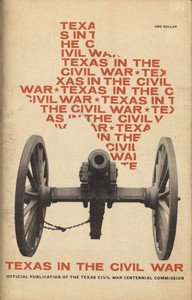
Texas in the Civil War: A Résumé History — A Reader’s Guide can be approached with a clearer sense of reading commitment from its source measurements: 21,260 words, 1 hr 33 min estimated reading time, and 4 detected text sections.
The text analysis averages about 13.9 words per sentence, while the detected sections provide another way to judge how the source is divided.
Project Gutenberg metadata also associates the work with “Texas -- History -- Civil War, 1861-1865,” connecting these edition facts with the source record’s subject description.
Explore this collection
These alternatives are selected using recorded categories and estimated reading time.
About 95 minutes
Modern Nations
21,701 recorded words. 2 minutes difference from this book's estimate.
View Gutenberg source #35122About 91 minutes
Modern Nations
20,764 recorded words. 2 minutes difference from this book's estimate.
View Gutenberg source #58549About 96 minutes
Modern Nations
22,071 recorded words. 3 minutes difference from this book's estimate.
View Gutenberg source #24741Search stored excerpts and compare books → Choose by your preferences →
Choices use stored catalog measurements. Estimates vary with reading speed. A shared category is a catalog label, not a claim that two books have the same argument or literary quality.
Search reads excerpt text stored with this catalog and links to its associated Gutenberg record. The connection is stored in the site database; this tool does not recheck that every excerpt is word-for-word identical to that external record. Excerpt search does not cover every chapter and does not verify historical publication dates.
Catalog snapshot checked: 2026-09-25. Coverage: 95 public books, 95 available source excerpts.
Read the complete public-domain text at its original source.
Read on Project GutenbergAllan C. Ashcraft's Texas in the Civil War: A Résumé History opens with a foreword by Walter E. Long, chairman of the Texas Civil War Centennial Commission, which frames the booklet as a response to public demand for a brief history of Texas's role in the conflict. The author's preface is absent; instead, the text launches directly into a chapter titled "Texas in 1860," establishing a chronological structure that proceeds through secession, mobilization, and campaigns. The work's official publication by a centennial commission and its dedication to all Texans who served the Confederacy signal a commemorative intent, yet the excerpts reveal a factual, enumerative style—lists of generals, regiments, and statistics dominate the later pages. This tension between commemoration and data-driven summary shapes the reader's experience from the first page.
The table of contents reveals a strict chronological march: "Texas in 1860," "Politics, Secession, and War," "Mobilization: Events of 1861," and so on through "The Break-Up: 1865." This structure gives the first-time reader a clear timeline but also imposes a year-by-year compartmentalization. For instance, the chapter "Texas Units Fighting Elsewhere: 1861-1863" overlaps temporally with "Campaigning: 1862," suggesting that the author prioritizes thematic grouping over strict sequence. The excerpts show that within each chapter, Ashcraft moves from broad statements—"Texas contributed heavily to the Confederate military effort"—to specific enumerations of generals and regiments. This pattern recurs: a general claim, then a list. Readers should note that the chronological headings do not always contain events from only that year; the 1863 chapter includes material on the winter of 1863-64, as seen in the discussion of Terry's Texas Rangers remaining in Georgia after Atlanta's fall.
One of the most striking features of the later excerpts is the heavy use of numbers. Ashcraft lists forty-five regiments of cavalry, twenty-three of infantry, twelve battalions of cavalry, and so on, followed by a separate tally of named units including thirty artillery batteries and sixty-one cavalry regiments. This statistical barrage serves to quantify Texas's contribution but can overwhelm a reader seeking narrative flow. The author also provides counts of generals: one full general (Albert Sidney Johnston), one lieutenant general (John Bell Hood), three major generals, thirty-two brigadier generals, and almost one hundred colonels. These figures appear without context about their roles or significance, leaving the reader to infer importance from the numbers alone. The effect is a history that feels more like a reference digest than a narrative, which aligns with the subtitle "A Résumé History." First-time readers may find it helpful to treat these lists as data points to be revisited rather than absorbed in one pass.
Ashcraft's authorial voice is detached and factual, rarely offering analysis or judgment. In the excerpt describing the end of Terry's Texas Rangers, he writes that the men "kept up their futile efforts to delay the advance of the overpowering Federal forces." The word "futile" is a rare evaluative note. Elsewhere, the tone is neutral: "Texas contributed heavily to the Confederate military effort in terms of manpower and in the area of leadership." The foreword, however, is more overtly commemorative, calling the booklet "a memorial to all Texans who served." This shift in voice between the paratext and the main body may affect how a reader interprets the historical content. The excerpts also include a Union officer's report on demoralization, quoted directly, which introduces an external perspective. Readers should be aware that the author's own stance is largely implicit, carried through selection and arrangement rather than explicit commentary.
The excerpts include a chronology mentioned in the foreword as prepared by a Committee on Chronology, though its content is not shown. The presence of such a committee, along with a publications committee and a list of commission members, underscores the institutional nature of this work. The foreword states that the booklet was prepared at no cost to the commission, and the author is identified as a professor at the Agricultural and Mechanical College of Texas. These details frame the text as an officially sanctioned summary rather than a critical history. For a first-time reader, the paratext—foreword, dedication, lists of commissioners—provides context for the work's purpose and limitations. The closing sections of the excerpts also reveal a focus on the war's end in Texas, including Kirby Smith's efforts to maintain forces and the eventual surrender. The final paragraphs shift to a summary of Texas's overall contribution, reinforcing the commemorative tone.
Readers approaching Texas in the Civil War for the first time will benefit from noting its dual nature: a commemorative booklet and a statistical compendium. The chronological structure offers a clear path, but the density of numbers and lists may require patience. Pay attention to the shifts between the foreword's celebratory language and the main text's factual tone. The excerpts suggest that the work is most useful as a reference for specific units, leaders, and dates rather than as a narrative history. Treat the lists as a starting point for further inquiry, and consider how the institutional origins shape the presentation of Texas's Civil War experience.
Reading Ashcraft’s tally of Texas’s sacrifices, those stark numbers of lost men and broken counties, left a quiet heaviness in me. It made me think of another voice from that same anguish, one less concerned with statistics and more with the raw, personal ache of it all. That old diary-like account, Border and Bastille — A Closer Reading, feels like the human whisper behind the ledger’s cold arithmetic.
Save your reaction, strongest insight, and memorable passage.