
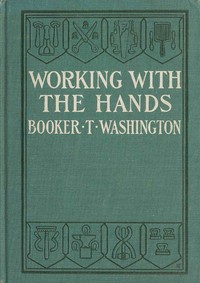
Working With the Hands by Booker T. Washington
Let's set the scene: It's the late 1800s, just a few decades after the Civil War. Booker T. Washington, a former slave turned leading educator, has a radical idea for lifting his community. He believes the most direct path to independence and self-respect isn't through politics or abstract theory alone, but through the mastery of practical skills.
The Story
The book is Washington's firsthand account of putting this idea into practice at the Tuskegee Institute in Alabama. We see the school's humble start in a broken-down shanty and a church. There's no money, so Washington and his students become builders, farmers, and craftspeople. They make the bricks for their own dormitories, grow the food for their own meals, and craft the furniture for their own classrooms. Each chapter walks us through a different trade—farming, carpentry, blacksmithing, homemaking—showing how learning these skills did more than put up buildings. It built character, confidence, and economic footing for people systematically denied both. The "plot" is the slow, hard, satisfying work of creating something lasting from nothing.
Why You Should Read It
This book hit me in a way I didn't expect. Washington's writing is clear and grounded. He's not a philosopher in an ivory tower; he's a man with mud on his boots explaining why that mud matters. His core theme—that head and hand must work together—feels shockingly relevant. In our age of digital everything and "knowledge economy" buzzwords, he asks us to remember the deep satisfaction and community value of making and fixing real things. He argues for the dignity of all work and the intelligence embedded in skill. Reading it, you feel a profound respect for the act of creation itself.
Final Verdict
This is a perfect read for anyone interested in American history, education, or the simple philosophy of work. It's for the DIY enthusiast, the gardener, the person who feels something is off about our modern disconnect from the physical world. It's not a flashy memoir; it's a steady, thoughtful, and ultimately inspiring blueprint for building a meaningful life from the ground up. You'll come away with a new appreciation for every well-laid brick and a timeless lesson in self-reliance.
This book is widely considered to be in the public domain. Enjoy reading and sharing without restrictions.
Susan Thompson
2 years agoAfter a thorough walkthrough of the table of contents, the author doesn't just scratch the surface but goes into meaningful detail. I’ll definitely be revisiting some of these chapters again soon.
Mary Miller
11 months agoHaving read the author's previous works, the language used is precise without being overly academic or confusing. This adds significant depth to my understanding of the field.
John Smith
5 months agoAs someone working in this industry, I found the insights very accurate.
Karen Martinez
1 year agoAs someone working in this industry, I found the insights very accurate.









Susan Lee
1 month agoThe author provides a very nuanced critique of current methodologies.