
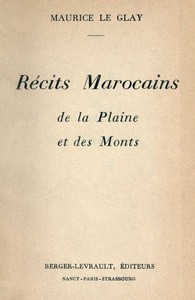
Récits marocains de la plaine et des monts by Maurice Le Glay
Maurice Le Glay wasn't a tourist. As a French colonial official in the early 20th century, he was embedded in the machinery of change sweeping through Morocco. Récits marocains de la plaine et des monts (Moroccan Tales from the Plains and Mountains) is his collection of observations and stories from that time. Don't look for a single, driving plot. Instead, think of it as a series of vivid snapshots.
The Story
The book is a mosaic of life. Le Glay moves from the bustling, complex cities of the plains to the remote, fiercely independent communities in the Atlas Mountains. We meet a Caid (local leader) trying to fairly settle a dispute between two villages, knowing his judgment will be scrutinized by both his people and the new French authorities. We follow the difficult journey of a mountain trader bringing his goods to market, navigating not just physical trails but a web of old alliances and new suspicions. In the cities, we see craftsmen, scholars, and ordinary families adjusting to a new political reality. There's no hero's journey, just the ongoing story of adaptation and resilience.
Why You Should Read It
Here's what grabbed me: the absence of easy answers. Le Glay doesn't paint himself as a savior or the Moroccans as noble savages. His perspective is unavoidably French, but he often steps back to let the scenes speak for themselves. The tension is palpable—you can feel the weight of tradition pressing against the inevitability of change. The characters, though briefly sketched, feel real. Their concerns about honor, family, livelihood, and faith are universal. Reading this today, it offers a crucial, ground-level prelude to modern Moroccan identity. It's less about who ruled and more about how people lived, negotiated, and preserved their world under shifting skies.
Final Verdict
This is a book for the curious traveler—the kind who wants to understand a place beyond the guidebook. It's perfect for readers interested in North African history, but from a social and human angle, not a military one. If you enjoy ethnographic writing or literary journalism that captures a specific time and place, you'll find this fascinating. A word of caution: it's a product of its era, so approach it as a historical document, not a modern critique. For anyone wanting to hear the faint, authentic voices from Morocco's past, before the full force of the 20th century hit, this is a unique and valuable listen.
No rights are reserved for this publication. Use this text in your own projects freely.
Richard Smith
1 year agoI found the author's tone to be very professional yet accessible, the quality of the diagrams and illustrations (if applicable) is top-notch. A mandatory read for anyone in this industry.
Jessica Perez
7 months agoComparing this to other titles in the same genre, the way the author breaks down the core concepts is remarkably clear. I appreciate the effort that went into this curation.
Charles Davis
1 year agoI appreciate the objective tone and the evidence-based approach.
Donald Martin
7 months agoAfter spending a few days with this digital edition, the case studies and practical examples provided add immense value. This adds significant depth to my understanding of the field.







Linda Perez
2 years agoExactly what I was looking for, thanks!